Loading
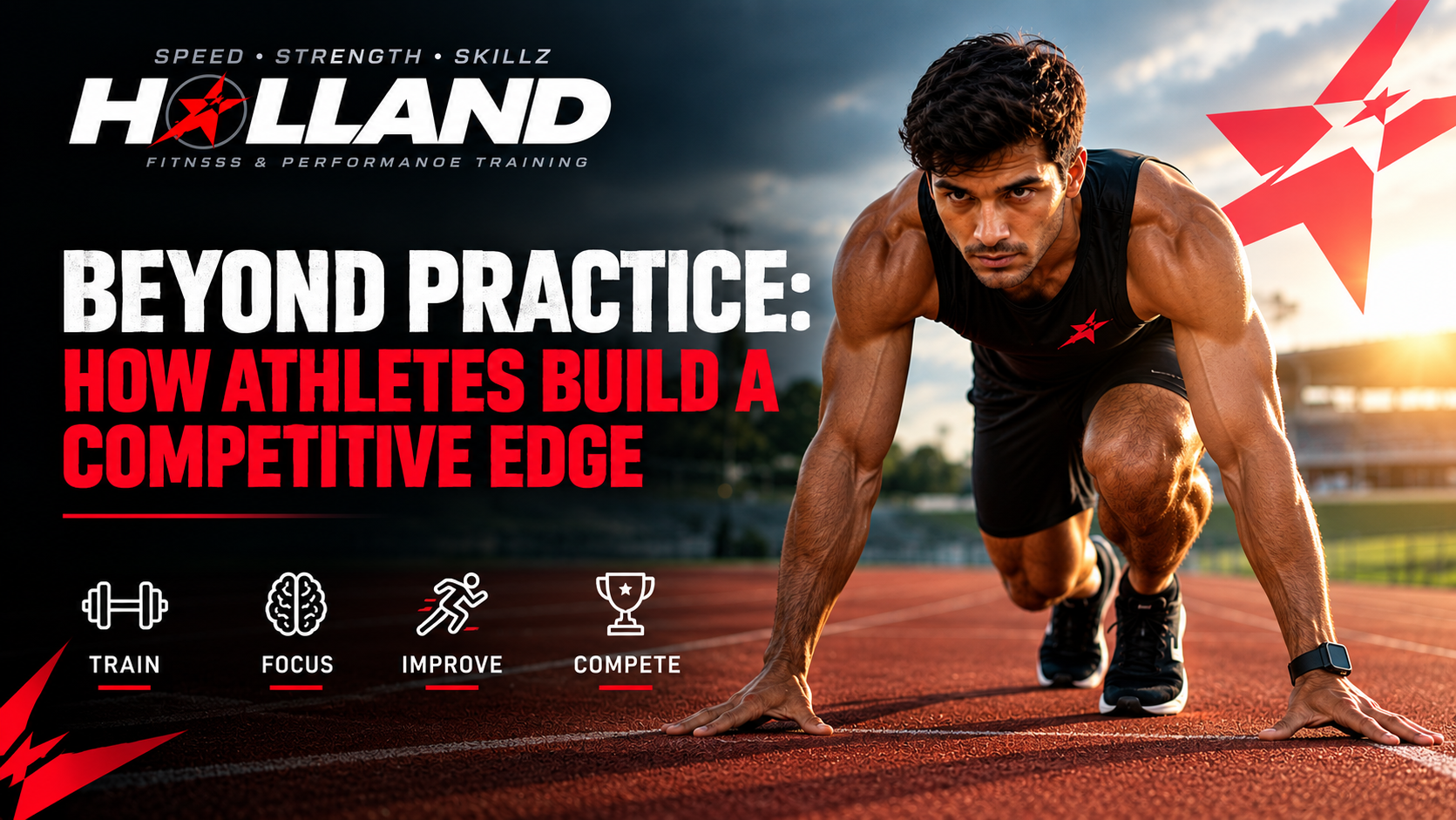
The work the athletes do long before game day is often reflected in their performance on the day. They respond well under pressure, which is influenced by their speed, balance, coordination, and strength. The Physical skills are developed in conjunction with the demands of sports practice in structured Athletic Improvement Programs. We want athletes to develop a platform that they can use while accelerating, changing direction, jumping, and reacting to players.
We believe athletic development and performance training is a process with Holland Fitness and Performance. We focus on the quality of movement, proper strength training, and speed and agility development instead of exertion. This allows athletes to have a clearer trajectory from learning simple movement patterns to growing their physical skills.
Athletes need different physical qualities depending on their sport, position, experience, and age. We consider several important areas when developing a training approach:
We use these areas as complementary parts of athletic preparation. The right priorities depend on each athlete’s current abilities and performance goals.
Progress is achieved by carrying out the correct skills repeatedly and raising the challenge level in a way that is suitable for the players. We always take the time to ensure good technique before increasing difficulty or intensity. For instance, if you’re a sprinter, you’ll start with balance and landing control, and then move on to more advanced jumping movements.
Children and adolescents ages 6 – 17 are recommended to engage in at least 60 minutes of moderate to vigorous physical activity each day. This means that aerobic exercise is included, and muscle-strengthening and bone-strengthening exercise at least 3 times per week. These are general guidelines we take into account with young athletes for their sport schedules, recovery, and developmental stage.
We prepare athletes for success through movement skills that have a lifetime application. Sprint mechanics can assist with speed, and agility exercises can help train change of direction under control. Strength and conditioning support these movements with additional physical support.
Our approach also takes into account the different ways in which athletes develop. Training experience, movement ability and personal goals are taken into account when deciding on appropriate exercises. To continue to be a key element of long-term development are consistent practice, appropriate technique, and recovery.
We believe progress begins with identifying what needs improvement, then building those abilities through purposeful practice. At Holland Fitness and Performance, we bring together athletic Improvement Programs and athletic development and performance training to support strength, speed, agility, and overall movement development. Our focus remains on helping athletes build physical skills they can carry into practice and competition.
It improves strength, speed, coordination, balance, and movement skills needed for sports.
Young athletes can begin with age-appropriate exercises emphasizing coordination, balance, technique, and body control.
Training frequency depends on age, sport, competition schedules, experience, and individual recovery needs.
Strength training can support acceleration and power when combined with appropriate sprint technique and practice.
Recovery allows the body to adapt to training, restore energy, and prepare for future activity.